In today’s technologically oriented economy, it’s no surprise that employees with strong computer skills fare better in the job market than their technology challenged counterparts. This trend influences hiring for virtually all jobs, not just technology-centered positions.
If you are in the market for a new job or formulating your professional development plan to position yourself for future career growth, then you should take some time to assess the technology preferences of employers in your field.
Before you start, be aware that there are basic computer and mobile device skills, as well as software skills, that employers may expect you have to have. If you don’t have them, take the time to brush up your skills so you’re a competitive candidate.
What skills do you need? Take the time to do some research to learn about the most in-demand skills for someone with your background and expertise.
How to Generate a List of Skills:
Review job postings for your target position on major job sites like Indeed.com and niche job sites for your industry. Make a list of the tech related qualifications that are cited most often.
Review workshop and seminar topics offered through your professional association to identify cutting edge skills.
Consult colleagues in your field and ask them which skills are the most highly valued in their environment.
Check LinkedIn to see what skills your connections in similar jobs have on their profiles.
The Importance of Speaking Practice Speaking to yourself can be "dangerous" because men in white coats may come and take you away!! That is why you should make every effort possible to find somebody to speak with How to Address People in English What name or title can we use when speaking to friends, colleagues, acquaintances, teachers, doctors etc? Greetings in English How to say hello in English. On these pages you can listen to and practise greeting people in a variety of situations - from the classroom to business Telephone English In this lesson we look at some of the words and expressions that we use for telephoning. There are also some practice sessions and a quiz for you to check your understanding Small Talk in English What can we say in casual conversations with strangers or colleagues we meet in the lift? Small talk is a casual form of conversation that "breaks the ice" or fills an awkward silence between people
Presentations in English Learn how to give a presentation or speak in public in English. This tutorial guides you step by step through the process of making a presentation, from preparation to conclusion and questions Speaking about the Weather in English Even strangers discuss the weather. Learn the proper vocabulary and expressions, and you'll find it easy to start a conversation anytime, anywhere--with anyone you meet!
Agreeing and Disagreeing in English Sooner or later you will get the urge to agree or disagree with something that is being said in English. Offering an opinion can be difficult when it is not in your first language
MS-CIT is an Information Technology (IT) literacy course started by MKCL in the year 2001. It is the most popular IT Literacy course in Maharashtra.In 21st Century, most of the new actionable knowledge is being digitally born (often through digital collaborations), digitally stored, digitally presented, digitally distributed, digitally accessed, digitally archived and managed. It only seems natural that it has become an essential part of one’s personal, professional and social life. It has also transformed the way of living in 21st Century. MS-CIT attempts to propagate it through IT Awareness, Literacy, Functionality and Applicability among the common people with a view to bridge the Digital Divide and the resultant Knowledge Divide and Development Opportunity Divide. This surely makes a positive impact on one’s job-readiness, social behavior and ultimately boosts the self-confidence, enabling him/her to work effectively in the 21st Century workplace.
This is MKCL’s flagship course with high quality course material which emphasizes on English. Communication and blend of Soft Skills. This course offers detailed understanding and hands on experience of not only English Communication but also about the Soft Skills.
Why take admission?
English is most used language in today’s world. Knowledge of English communication creates the influential personality. The blend of Soft Skills with English Communication gives extra advantage to aspirant and gives him/her the added edge over others to become employable.
KLiC ENGLISH Course is perfect combination of English Communication and Soft Skills. In this course the emphasis is not only about learning English but is to make the aspirant speak till the basic level by the end of the course. The Soft Skills part of the course gives catalytic effect and creates perfect blend for this course.
Aspirant is taken through the journey from unknown to known. The confidence to speak in English is definitely raised. The interactive sessions in this course with help of real life case studies makes the aspirant to comfortable to connect with English Communication and Soft Skills.
Software is a set of programs, which is designed to perform a well-defined function. A program is a sequence of instructions written to solve a particular problem.
There are two types of software −
System Software
Application Software
System Software
The system software is a collection of programs designed to operate, control, and extend the processing capabilities of the computer itself. System software is generally prepared by the computer manufacturers. These software products comprise of programs written in low-level languages, which interact with the hardware at a very basic level. System software serves as the interface between the hardware and the end users.
Some examples of system software are Operating System, Compilers, Interpreter, Assemblers, etc.
Here is a list of some of the most prominent features of a system software −
Close to the system
Fast in speed
Difficult to design
Difficult to understand
Less interactive
Smaller in size
Difficult to manipulate
Generally written in low-level language
Application Software
Application software products are designed to satisfy a particular need of a particular environment. All software applications prepared in the computer lab can come under the category of Application software.
Application software may consist of a single program, such as Microsoft's notepad for writing and editing a simple text. It may also consist of a collection of programs, often called a software package, which work together to accomplish a task, such as a spreadsheet package.
Examples of Application software are the following −
What are the differences between hardware and software?
Updated: 10/07/2019 by Computer Hope
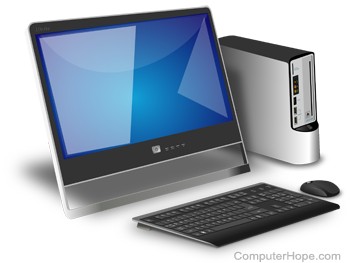
Computer hardware is any physical device used in or with your machine, whereas software is a collection of code installed onto your computer's hard drive. For example, the computer monitor you are using to read this text and the mouse you are using to navigate this web page are computer hardware. The Internet browser that allowed you to visit this page and the operating system that the browser is running on are considered software.
Further information and examples
All software utilizes at least one hardware device to operate. For example, a video game, which is software, uses the computer processor (CPU), memory (RAM), hard drive, and video card to run. Word processing software uses the computer processor, memory, and hard drive to create and save documents.
Hardware is what makes a computer work. A CPU processes information and that information can be stored in RAM or on a hard drive. A sound card provides sound to speakers, and a video card provides an image to a monitor. Each of these are examples of hardware components.
Can a computer run without software?
In most situations, yes, a computer can run without software being installed. However, if an operating system or interpreter is not found, it either generates an error or doesn't output any information. A computer needs an operating system that allows both the user and software to interact with the computer hardware.
Installing programs onto the computer in addition to an operating system gives the computer additional capabilities. For example, a word processor is not required, but it allows you to create documents and letters.
The internet is a globally connected network system that uses TCP/IP to transmit data via various types of media. The internet is a network of global exchanges – including private, public, business, academic and government networks – connected by guided, wireless and fiber-optic technologies.
The terms internet and World Wide Web are often used interchangeably, but they are not exactly the same thing; the internet refers to the global communication system, including hardware and infrastructure, while the web is one of the services communicated over the internet.
Techopedia explains Internet
As computing advanced, peer-to-peer (P2P) communication was gradually delivered and enhanced. Since the 1990s, the internet has greatly influenced and upgraded networking to global standards. Billions of internet users rely on multiple application and networking technologies, including:
Internet Protocol (IP): The internet’s primary component and communications backbone. Because the internet is comprised of hardware and software layers, the IP communication standard is used to address schemes and identify unique connected devices. Prominent IP versions used for communications include Internet Protocol version 4 (IPv4) and Internet Protocol version 6 (IPv6).
Communications: The internet is the most cost-effective communications method in the world, in which the following services are instantly available:
Email
Web-enabled audio/video conferencing services
Online movies and gaming
Data transfer/file-sharing, often through File Transfer Protocol (FTP)
Instant messaging
Internet forums
Social networking
Online shopping
Financial services
The internet originated with the U.S. government, which began building a computer network in the 1960s known as ARPANET. In 1985, the U.S. National Science Foundation (NSF) commissioned the development of a university network backbone called NSFNET. The system was replaced by new networks operated by commercial internet service providers in 1995. The internet was brought to the public on a larger scale at around this time.
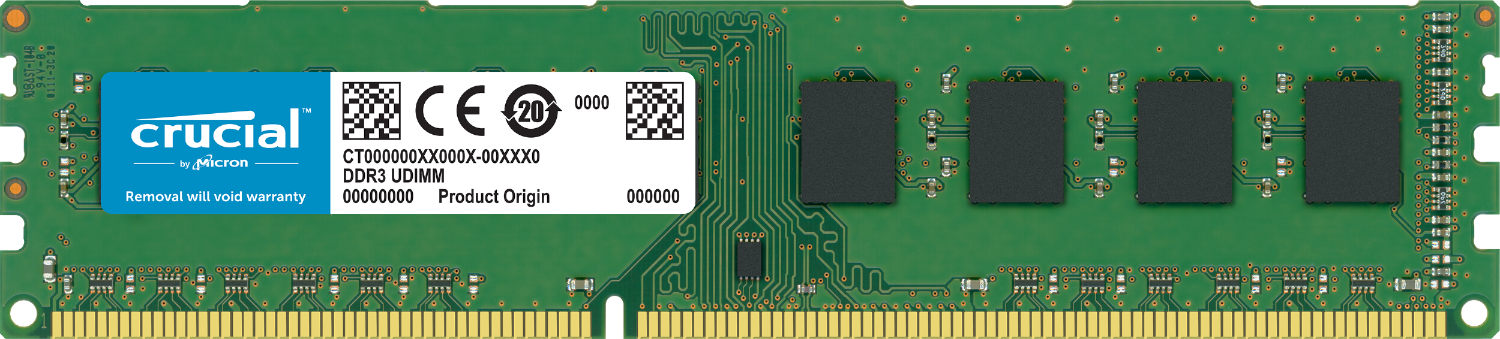
Random Access Memory, or RAM, is hardware found in the memory slots of the motherboard. The role of RAM is to temporarily store on-the-fly information created by programs and to do so in a way that makes this data immediately accessible. The tasks that require random memory could be; rendering images for graphic design, edited video or photographs, multi-tasking with multiple apps open (for example, running a game on one screen and chatting via Discord on the other).
How much RAM you require depends on the programs that you’ll be running. Medium intensity gaming generally uses 8GB of memory when performed alongside other programs, but video/graphic design can use upwards of 16GB of RAM. Find out how much memory your computer needs.
The S-400 Triumf (Russian: C-400 Триумф, Triumph; NATO reporting name: SA-21 Growler), previously known as the S-300 PMU-3,[3] is an anti-aircraft weapon system developed in the 1990s by Russia's Almaz Central Design Bureau as an upgrade of the S-300 family. It has been in service with the Russian Armed Forces since 2007. The S-400 uses four missiles to fill its performance envelope: the very-long-range 40N6 (400 km), the long-range 48N6 (250 km), the medium-range 9M96E2 (120 km) and the short-range 9M96E (40 km). The S-400 was described by The Economist in 2017 as "one of the best air-defence systems currently made".[4]
Development of the S-400 system began in the late 1980s, and the system was announced by the Russian Air Force in January 1993.[5] On 12 February 1999 the first, reportedly-successful tests were performed at Kapustin Yar in Astrakhan, and the S-400 was scheduled for deployment by the Russian army in 2001.[6]
In 2003, it became apparent that the system was not ready for deployment. In August, two high-ranking military officials expressed concern that the S-400 was being tested with "obsolete" interceptors from the S-300P system and concluded that it was not ready for deployment.[6] Completion of the project was announced in February 2004, and in April a ballistic missile was successfully intercepted in a test of the upgraded 48N6DM missile.[7][8] In 2007, the system was approved for service.[9]Russia has accepted for service the 40N6 long-range missile for the S-400 air defence system, a source in the domestic defense industry told TASS news agency in October 2018.[10]
The 30K6E is an administration system which manages eight divisions (battalions).[13][14][15] The 55K6E is a command and control centre based on the Ural-532301. The 91N6E[16] is a panoramic radar detection system (range 600 km) with protection against jamming which is mounted on an MZKT-7930. The S band system can track 300 targets.[17] Six battalions of 98ZH6E surface-to-air missile systems (an independent combat system)[18] can track no more than six targets on their own,[19]with an additional two battalions if they are within a 40-kilometre (25 mi) range. The 92N6E (or 92N2E) is a multi-functional radar with a 400-kilometre (250 mi) range which can track 100 targets.[20] The 5P85TE2 launcher and the 5P85SE2 on a trailer (up to 12 launchers) are used for launch. The 48N6E, 48N6E2, 48N6E3, 48N6DM, 9M96E, 9M96E2 and the ultra-long-range 40N6E are authorised by a Russian presidential decree.[21] According to the Russian government, the S-400[specify]utilises an active electronically scanned array.[22]
S-400 92N2 radar and 5P85T2
Optional elements of the S-400 (98ZH6E)[18][23] include the 15I6ME–98ZH6E, with coverage of 30, 60 and 90 km beyond the 30K6E coverage. The 96L6E[24] has a 300-kilometre (190 mi) detection range. The 40B6M is housing for the 92N6E or 96L6E radar. The Protivnik-GE is an anti-stealth UHF radar with a 400-kilometre (250 mi) range.[25] The Moscow-1 passive sensor is 21⁄2 times more effective than the Protivnik, with a 400-kilometre (250 mi) range[26] Orion[27] for a target-designation on-the-air defence system, and the Avtobaza-M[28] and Orion+ Avtobaza adds high-precision detection. The 1RL220BE[18][29] versions were reportedly used for jamming.[30] The 400-kilometre (250 mi)-range S-200D Dubna (SA-5c) missiles and S-300 P-family radar systems can be used without additional command-and-control centres.[31] S-300 (SA-20A, SA-20B) missiles may also be guided.[32]A-50 and A-50U[13] aircraft provide early warning and command-and-control target designation.[33]
The 30К6Е control system can be integrated with the[18] S-400 Triumph 98ZH6E system; the S-300PMU2 (through the 83М6Е2 control system); the S-300PMU1 (through the 83М6Е control system); the Tor-M1 through the Ranzhir-M battery-command post; the Pantsir-S1 through the lead battery vehicle. The Protivnik-GE and Gamma-DE radars, integrated with the 92H6E radar system, enables communication between each battery with Baikal-E senior command posts and similar types; nearby 30К6Е, 83М6Е and 83М6Е2 administration systems; the Polyana-D4М1 command post; fighter-aircraft command post, and mobile long-range radars. The system's VHF component provides sector search and tracking, with the X- and L-band components providing fine-tracking capability. Good placement of the radars relative to the threat axis enables the L- and X-band components to illuminate the incoming target from angles where the target RCS is sub-optimal. The RLM-S and RLM-D have better elevation-tracking accuracy than the RLM-M, and the Nebo M should be capable of producing high-quality tracks suitable for mid-course guidance of modern surface-to-air missiles and trajectory guidance of legacy SAMs.[34]
The Gamma-C1E SHF mobile radar station has a 300-kilometre (190 mi) detection range.[35] The Nebo VHF mobile radar station and the Resonance-NE radar station have a detection range of 1,200 kilometres (750 mi) and 65 kilometres (40 mi) to a height of 500 metres (1,600 ft). All Nebo-family locators are doubled for army air defence.[36] During the 1970s, the long-range mobile UHF 5H87 and SHF 5H69 low-altitude locators were used.[37][38] a 1980s goal was detection at a height of 10 metres (33 ft) at a distance of 40 km (25 mi).[39] The Elbrus-90 computer is used to control the system.[40]
For export to foreign customers, with the purpose of integrating existing customer air defence systems, additional work on improvement of the 30K6E administration system for information technology pairing with anti-kets is in progress.
96L6E radar and equipment work separately (100 metres), 96L6E2 export version has the capability to track a maximum 100 targets. In mountainous terrain the system is resistant to false returns or clutter. Replaces the radar to detect low-level radar targets and conduct radar sector review. Omnidirectional to detect all aircraft types, including low-observable (not against ballistic missiles). Can perform the functions of a command post for battalions of S-300 (SA20/20A/20B)[45] or S-400. 96L6-1[46] of S-400 and S-500. Maximum height for the detection of the target 100 km away and from all directions. Can use a special tower 966AA14. Detection capability against cruise missiles and stealth. It serves as the command post for the battalions. Phased-array radar and multipath.[45]
Automatic operation, serves as the command centre for the entire system (all battalions and all external resources including passive). The maximum distance between the command center and the battalion of 98ZH6E with the use of retransmitters is up to 100 km.
5P85TE2 launchers and/or 5P85SE2 on the trailer
5P85TE2 launchers and/or 5P85SE2 on the trailer in conjunction with a BAZ-64022or MAZ-543M tractor-trailer. In 2014, a new type of transporter was introduced, improving the mobility of the system. The fuel consumption was cut by 35%. The total cost of launcher actually dropped 25% (The cost of transporters in 2014 is 8.7 million rubles [approximately 240 thousand dollars]).[48]
One system comprising up to 8 divisions (battalions) can control up to 72 launchers, with a maximum of 384 missiles[49](including missiles with a range of less than 250 km (160 mi)).[50][51] The missiles are fired by a gas system from the launch tubes up to 30 metres into the air before the rocket motor ignites, which increases the maximum and decreases the minimum ranges.[32] In April 2015, a successful test firing of the missile was conducted at an airborne target at a range of 400 km (250 mi);[52][53] TELs carrying the long-range 40N6 may only be able to hold two missiles instead of the typical four due to its larger size.[54] Another test recorded a 9M96 missile using an active radar homing head, reached a height of 56 km.[55][56] All the missiles are equipped with directed explosion warhead, which increases the probability of complete destruction of targets.[57] In 2016, Russian anti-aircraft missile troops received new guided missiles for S-300 and S-400 defense systems.[58] Anti-aircraft missile system, designed to destroy aircraft, cruise and ballistic missiles, it can also be used against ground objectives.[59] The S-400 is able to intercept cruise missiles out to a range of about 40 km due to their low altitude flight paths.[60]
High hit probability with one missile against fast, maneuvering targets. Aircraft = 0.9; UAV = 0.8; Missile = 0.7.[16][66] Load factor of more than 20 g at 30 km altitude greatly increases the probability to destroy short- to medium-range ballistic missiles.[31]
Marksmanship for the radio horizon, with homing action to aid interception of low-flying targets at long range. Optical and infrared range of 9M96 versions combined with approximate figures from long-wavelength radar can detect and home-in on stealth targets.[69]
The new anti-ballistic missiles 77N6-N and 77N6-N1 to enter service in 2014 supposedly add inert/kinetic anti-ballistic capability to the system.[70] The same missiles will also be used by the S-500, which has a clearly stated anti-ICBMrole.[71]
A separate independent air defence system 42S6 Morfey (Morpheus) is being developed. This system is designated as short-range air defence system to protect the S-400 from various threats at their terminal phases, and will also act together with the S-350E as a supplement to the S-400. Together, these systems form part of the Aerospace Defence Forces.[72]
Development of Morfey started in 2007 and was planned to be introduced in 2013, however was delayed until at least 2015.[73][74][75][76] The missile system consists of omnidirectional 29YA6 radar, infrared sensors and 36 missiles.[72][77] The missiles have up to 10 km range and an altitude of up to 3500 m.[72][78]
Exterior target indication separate independent RLS "Niobium". Mobility 5 minutes. Frequency band S and UHF. Detection range of 600 km (RCS 1 square meter to 430 km), the target speed of 8000 km / h, 4791 miles, Mach 6.35. For detection, the owner of the state to transfer command of targeting items (in this application, the maximum speed grows from subordinates systems). Planner "nniirt".[79][80]
All-purpose maximum radial velocity is 4.8 kilometres per second (17,000 km/h; 11,000 mph; Mach 14); absolute limit 5 kilometres per second (18,000 km/h; 11,000 mph; Mach 15),[67] the minimum is zero.[18]
The complex can move on roads (60 km/h) and off-road (ground) at speeds up to 25 km/h.[87]
According to the Pravda.ru newspaper article, the price of one battalion (about 7–8 launchers) is $200 million.[100]
Practical probability of success 83.3% (for 1 missile, not 2). One day overcome 1500 km (railway transport), occupied position. Destroyed 10 targets, applied 12 missiles.[101] Targets were at extra high and super low height.[102][102] In conditions of strong interference, and at the maximum range (250 km), a small-sized target (China) was destroyed, the target speed was 3 km / s (ballistic missile).[103]
A regular S-400 battalion consists of at least eight launchers with 32 missiles and a mobile command post.[104] On May 21, 2007 the Russian Air Force announced that S-400 would be put on combat duty around Moscow and Central Russia by July 1, 2007.[105] The S-400 was also deployed near the town of Elektrostal.[106]
On August 6, 2007, the first regiment equipped with S-400 entered active service in Moscow Oblast near Elektrostal, according to Channel One Russia. This is the 606th Guards Anti-air Rocket Regiment, 9th PVO Division, 1st PVO Corps, of the Special Purpose Command.[107]
On February 8, 2008, Lt. Gen. Vladimir Sviridov announced that Russia will be replacing the S-300 systems in the Northwest of Russia with the more technologically advanced S-400. Russian military experts expect that Russia plans for this system to be in place and represent a major component of their ballistic missile defense system until 2020.[108]
On March 17, 2009, Russia's defense minister announced that a second regiment equipped with advanced S-400 Triumf air defense missile systems has been put into combat service.[110]
On August 26, 2009, the General Staff said S-400 systems had been deployed in the Russian Far East to counter possible North Korean missile tests and prevent fragments from falling on Russian territory.[104]
In February 2011, a second unit of S-400 missile systems was deployed at Dubrovki, north of Moscow. The 210th Air Defence Regiment consists of two battalions, each consisting of eight launch points, each with four missiles.[111] In February 2011, it was also announced that the missile system will be deployed in southern Kuril Islands "to protect Russia's sovereignty in the Far East".[112]
The Baltic Fleet in Kaliningrad received S-400 SAM systems in February 2012, and these went into operational status in April 2012.[113][114] One S-400 division is deployed on combat duty in the Russian far east city Nakhodka.[115]
As of 2012, one system (in Electrostal) was operational, with three more S-400 battalions being deployed. All 56 battalions will be delivered by 2020.[116] Russia is also setting up two regiments of S-400 in Eastern Military district.[117]
As of September 2013, the Russian Armed Forces had five S-400 regiments: two in Moscow, one in the Pacific fleet, one in the Baltic Fleet, and one in the Southern Military District. From 2014, the army was to receive two to three sets of regimental units of S-400 systems every year.[118] Another S-400 regiment was to be put on combat duty around Moscow by the end of 2013. Russia plans to have 28 S-400 regiments by 2020, each comprising two or three battalions with four systems each, mainly in maritime and border areas.[119]
In November 2015, it was announced that when the Kirov-class battlecruiserAdmiral Nakhimov was recommissioned with the Russian Navy in 2018, it will be equipped with the 48N6DMK anti-aircraft missile derived from the land-based S-400. The inclusion of the 48N6DMK into the Kirov's arsenal extends its air defense range from 100 km (62 mi; 54 nmi) with the 48N6E2 missile from the S-300FM to 250 km (160 mi; 130 nmi).[120]
On 1 March 2016, the acting commander of the 14th Air Force and Air Defense Army, major general Vladimir Korytkov, said that six S-400 units had been activated pursuant to his order in the anti-aircraft missile regiment of the Novosibirsk air defense formation in Russia's Novosibirsk Oblast.[121] TASS also reported that as of the end of 2015, a total of eleven Russian missile regiments were armed with S-400, and by the end of 2016 their number was expected increase to sixteen.[121]
In November 2015, the deployment of S-400 was reported in Syria, along with the contingent of Russian troops and other military hardware in the course of the air campaign conducted by the Russian forces on the side of the Syrian government.[122] However, those reports were refuted by Russia.[123] On 25 November 2015, the Russian government announced it would deploy S-400s in Syria in response of the downing of its SU-24 jet by Turkey.[124] On 26 November 2015, such deployment was reported by official Russian news media to have been carried out.[125] The first S-400 system was reportedly installed at Humaymim Air Base in Latakia Governorate.[126]
Between April and July 2017, a second S-400 system was deployed 13 km northwest of Masyaf, Hama Governorate.[126]
In March 2014, it was announced that Russian President Vladimir Putin gave authorization to sell the S-400 system to the People's Republic of China.[127] If China should acquire the S-400, reported to initially consist of six batteries, it would significantly improve China's ability to defend its own air space and serve as an effective stand-off weapon against air attacks. With a 400 km (250 mi) coverage range, aircraft in disputed areas off the coast could be targeted by SAMs from the mainland; all of Taiwan would be covered from Fujian province, and the Diaoyu Islands would be covered from Shandong province, making it difficult for the US and Japan to deploy combat aircraft over those airspaces. Taiwan seeks to address these potential advantages by locating S-400 batteries once activated using extensive SIGINT units and destroying them with stand-off weapons, cruise and ballistic missiles, and anti-radiation missiles.[128]
On 13 April 2015, the chief executive of the Russian state-run arms trader Rosoboronexport has confirmed that China secured a contract with his company for the purchase of the S-400 air defence systems.[129][130]
Although China's acquisition of the S-400 system has been viewed as a "game changer" in the region, several factors may constrain its effectiveness in East Asia. Though the 40N6 missile has a range of 400 km, it is not known if such a missile is available for export. Even if China does acquire the missile, the disputed Diaoyu Islands would be at the limit of its range if stationed along the coast, as would the Indian capital New Delhi if stationed right on the border and moved into the Himalaya Mountains. Against Taiwan, only the 40N6 could bring all its airspace in range, but deploying it along the coast of Fujian province at sea level would prevent it from locating low-level aircraft at long range due to the Earth's curvature; the shorter-range 48N6 would be even less useful against maneuvering targets at long range. These issues, along with dangers of misidentifying and engaging friendly aircraft at such great distances, may restrict Chinese S-400 use to mainly defensive purposes.[131]
Delivery of the system began in January 2018.[132] It was reported that China planned to test fire Russian S-400 systems for the first time in late July or early August 2018.[133]
The Best Way Of Nirmala Computer Education
The use of computers among maximum practiced in the field of business. In fact, small businesses also use the computer as there are now very cheap microcomputers. Business organizations now have a number of facts and a lot of numbers to be processed. So many businesses have started using the computer, for example to calculate the salary, to identify the goods sold and are still in stock, to issue and send or receive business statements, letters, invoices and more.
The use of computers and office equipment to assist other managers, clerks, and the management of office automation mentioned. One of them is a word processing type of electronic method that enables us to produce and edit letters, reports, documents, and other than work in a few seconds to type manually. Many of the office to produce standard letters, such as payment of the balance, invitations and more. In addition, local business organizations to use computers to create, save, and send envoys to a particular place. The advantages of using computers in this area, clearly it is very important in a business organization.








 Posts
Posts


